
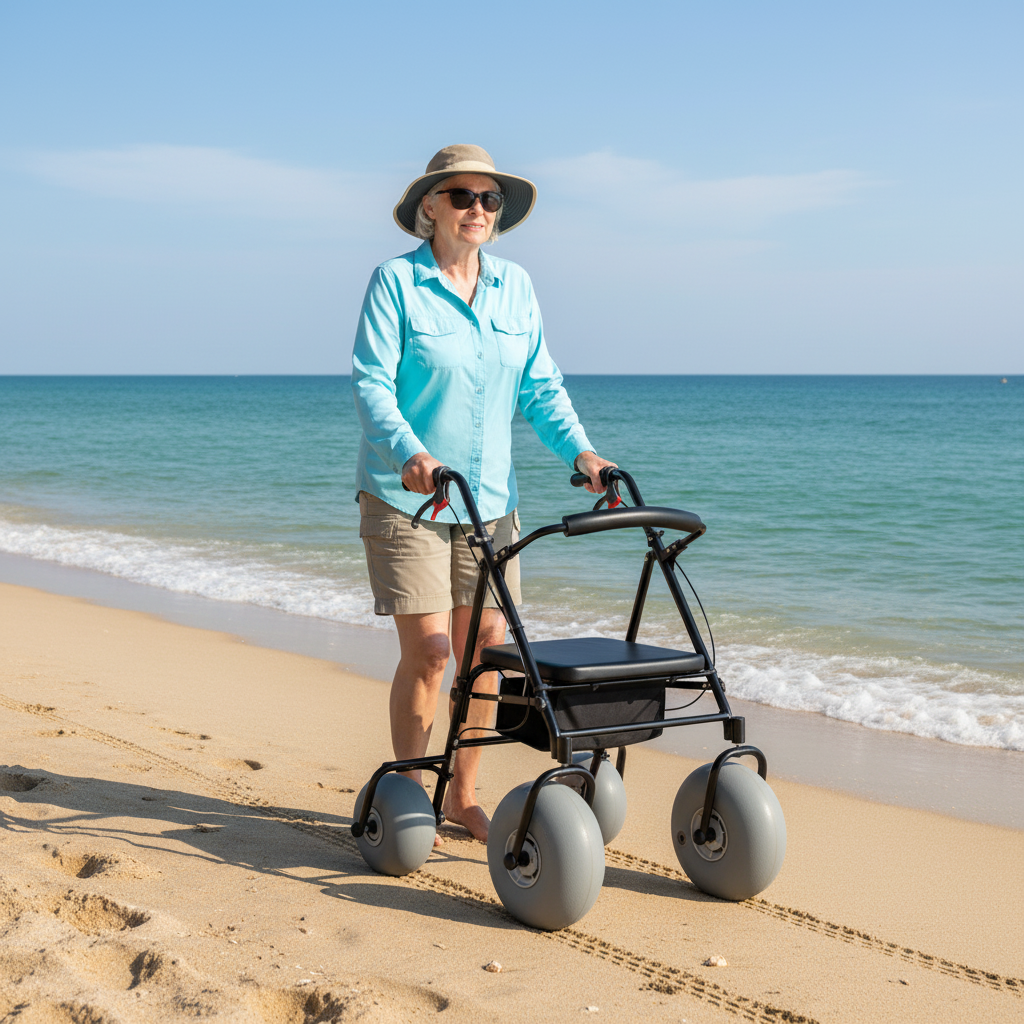
Picture this: the sun warming your face, the gentle susurrus of waves washing ashore, and the salty air invigorating your senses. It’s a perfect beach day. You’re ready to join your family at the water’s edge, but then you glance down at your standard walker, and your heart sinks a little. Those slender wheels seem to tremble at the mere thought of the deep, granular expanse between you and the tideline. It’s a familiar frustration, an exercise in futility where every push feels like you’re battling the very landscape.
But what if you could glide across that sand with the same ease as a sandpiper skittering along the shore? The secret isn’t about brute force; it’s a feat of clever engineering. This isn’t just about mobility; it’s about reclaiming your freedom to enjoy the coast. Welcome to the world of specialized beach walkers. This guide is your compass, designed to navigate you through the nuances of balloon tires, amphibious frames, and must-have features, ensuring you find the perfect ambulatory companion for every seaside adventure. Your journey to the shore starts now.
Don’t Let the Sand Stop You: Why Your Standard Walker Just Won’t Do
Anyone who has tried knows the answer to the question, “Can I take my walker to the beach?” The answer is usually a frustrating “no.” The fundamental problem lies in physics. Your standard walker or rollator is designed for firm, flat surfaces like pavement and indoor flooring. Its wheels are thin and hard, designed to slice through the air with minimal friction.
On the beach, this design becomes its greatest weakness. The soft, shifting sand offers no firm ground for these narrow wheels. Instead of rolling over the surface, they dig in, sink, and get stuck. Every push requires immense effort, turning a relaxing stroll into an exhausting struggle. This is the primary reason why so many people with mobility impairments feel excluded from beach activities. It’s not just about the difficulty walking on sand; it’s about having the wrong equipment for the job. You wouldn’t take a sports car off-roading, and you shouldn’t take a standard walker onto the sand. To conquer the coast, you need a tool built for the terrain—a proper sand-friendly mobility device.
Meet Your New Beach Best Friend: The Different Types of Beach Walkers
Once you accept that a specialized beach walker is necessary, a new world of options opens up. These devices are engineered specifically to provide mobility assistance for beach access, turning a challenging environment into a navigable one. Let’s explore the main categories.
The All-Terrain Champion: Walkers with Big Balloon Wheels
When you picture a sand walker, this is likely what comes to mind. These are the undisputed kings of soft, dry sand. The defining feature is their set of large, low-pressure balloon wheels. These oversized, pliable tires, often made by companies like Wheeleez, are the magic behind mobility on sandy beaches.
Instead of cutting into the sand, balloon tires distribute your weight over a much wider surface area. This allows the walker to “float” on top of the sand, gliding with surprisingly little effort. It’s the difference between trying to push a knife through sand versus a spatula. This design makes them the ultimate mobility aids for soft surfaces.
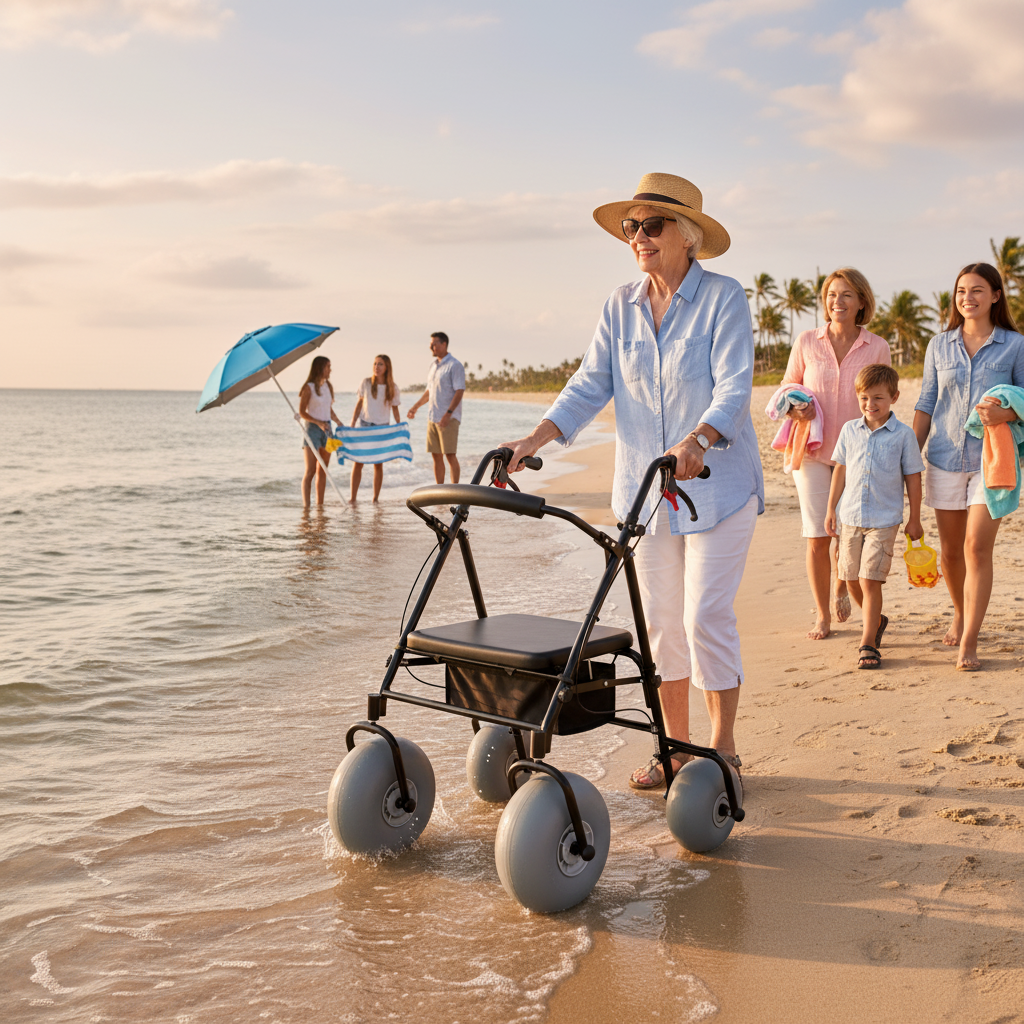
Models like the DeBug beach walker or other walkers with large balloon wheels for sand are game-changers, offering unparalleled stability and ease of movement on the most challenging part of the beach—the deep, loose sand far from the water’s edge. They are true all-terrain rollators designed with the beach as their primary battlefield.
The Amphibious Adventurer: Submersible & Floating Walkers
What if you want to do more than just get to the water’s edge? What if you want to feel the cool waves lap at your ankles? For this, you need an amphibious or submersible walker. These unique devices are often constructed from medical-grade PVC, a material that is completely waterproof and corrosion-resistant.
Unlike their metal counterparts, these PVC walkers have no parts that will rust or degrade when exposed to salt water. Some are even designed to be floating beach wheelchairs or walkers, providing support and buoyancy once you’re in the water. These models provide the ultimate sand and water access, transforming the entire shoreline into an accessible playground. They are a fantastic choice for individuals who want to participate in water-based therapies or simply enjoy a safe and stable dip in the ocean. They represent a pinnacle of accessible beach equipment, offering true “from sand to sea” capability.
The Clever Convertible: Rollators with Beach-Ready Conversion Kits
Perhaps you’re looking for a more versatile solution. You might already own a heavy-duty outdoor walker or an all-terrain rollator that you love for trails and parks. In some cases, you don’t need a whole new device; you just need a new set of wheels.
Beach walker conversion kits allow you to swap out the standard wheels on your existing rollator with specialized beach tires. These kits often feature either balloon wheels or extra-wide, solid polyurethane wheels designed for better performance on sand. This approach offers excellent value and versatility. You can use your walker for everyday outdoor adventures and, when a beach trip is on the horizon, simply switch the wheels to create a capable sand-friendly mobility device. It’s a practical solution for those who need a single, adaptable mobility aid for various uneven terrains.
It’s All About the Wheels: The Secret to Gliding Over Sand
The single most important feature of any beach walking aid is its wheels. The right wheels are the difference between struggling and soaring. Let’s break down the technology that makes easy walking on sand possible.
Balloon Tires vs. Puncture-Proof: What’s the Real Difference?
This is the central debate in the world of wheeled mobility aids for sand.
| Wheel Type | Description | Best For | Pros | Cons |
|---|---|---|---|---|
| Balloon Tires (Pneumatic) | These are low-pressure, pliable, and extra-wide tires that look like small beach balls. They are filled with air and designed to flatten slightly under load, maximizing their surface area. | Deep, soft, and dry sand. The ultimate choice for maximum floatation. | Unmatched performance on soft sand. Excellent shock absorption, providing a smooth ride. | Can be punctured. Require proper inflation. May be cumbersome on hard surfaces. |
| Puncture-Proof (Polyurethane) | These are solid but wide tires made from durable polyurethane. They are airless and designed to be tough and maintenance-free. | Mixed terrain: hard-packed wet sand, boardwalks, accessible pathways, and transitioning from parking lots. | Completely puncture-proof and maintenance-free. More durable for varied surfaces. Better handling on hard ground. | Less “float” on very soft, deep sand compared to balloon tires. Less shock absorption. |
The Bottom Line: If your primary goal is conquering the softest, deepest sand, large pneumatic tires are your best bet. If you anticipate crossing a mix of surfaces and want a zero-maintenance, rugged option, a walker with wide, puncture-proof wheels is an excellent choice.
Size and Width Explained: How to Match Your Wheels to the Sand
When it comes to beach wheels, size matters. The principle is simple: wider is better.
- Width: A wider wheel distributes weight more effectively, which is the key to preventing sinking. Standard walker wheels are often less than 2 inches wide, while specialized beach wheels can be 4, 7, or even 9 inches wide. This dramatically increases the surface area in contact with the sand.
- Diameter: A larger diameter wheel rolls over obstacles and uneven surfaces more easily than a smaller one. It helps in maintaining momentum and requires less physical effort to push.
When looking at a beach mobility guide, you’ll see that the most effective models combine both a wide profile and a large diameter. This combination ensures you have the stability and mechanical advantage needed to navigate sandy terrain with confidence.
Built to Brave the Elements: Choosing a Frame That Lasts
The beach is a harsh environment. The combination of salt, sand, and humidity can wreak havoc on mobility equipment. Choosing a walker with a frame made from the right material is crucial for ensuring longevity and safety. A durable beach walker is an investment that should last for many seasons.
The Lightweight Contender: Rust-Resistant Aluminum
Marine-grade or anodized aluminum is a popular choice for lightweight beach walkers. Aluminum’s primary advantage is its excellent strength-to-weight ratio. This makes the walker easier to lift, transport, and maneuver. A foldable walker made from aluminum is ideal for travel and fitting into a car trunk. While naturally rust-resistant, it’s not completely rust-proof. It is essential to rinse aluminum frames with fresh water after every beach visit to wash away salt residue that can lead to corrosion over time.
The Heavy-Duty Hero: Durable Stainless Steel
For those who need maximum durability and a higher weight capacity, stainless steel is the material of choice. Stainless steel frames are exceptionally strong and can withstand rigorous use, making them a type of heavy-duty walker. They provide a feeling of unshakable stability, which can be very reassuring on uneven ground. However, this strength comes with a trade-off: weight. Stainless steel walkers are significantly heavier than their aluminum counterparts. Like aluminum, they are highly resistant to rust but still benefit from a freshwater rinse to maintain their integrity.
The Saltwater Specialist: Medical-Grade PVC
For the ultimate in salt water resistant performance, nothing beats medical-grade PVC. This material is completely inert to salt and will not corrode, rust, or degrade, even with repeated submersion. This is why it’s the exclusive choice for amphibious and aquatic wheelchair style walkers. PVC frames are surprisingly strong and lightweight, though they may not offer the same weight capacities as high-end metal frames. If your beach plan involves getting wet, a PVC frame is not just a good option—it’s the only one that makes long-term sense.
More Than Just a Frame: Must-Have Features for a Perfect Beach Day
The best sand-friendly mobility devices are more than just wheels and a frame. Thoughtful design and practical accessories can elevate your beach experience from good to great. Here are some must-have features to look for.
A Place to Rest: The Importance of a Comfortable, Quick-Drying Seat
Walking on sand, even with the best all-terrain rollator, is more tiring than walking on pavement. Having a comfortable place to sit and rest is essential. Look for walkers that include an integrated seat. The best seats for the beach are made from mesh or other quick-drying, breathable fabrics. These materials won’t hold water if they get splashed and will stay cooler in the sun than solid plastic or vinyl. This feature turns your walker into a personal, portable beach chair, allowing you to stop and enjoy the view whenever you wish.
Brakes, Locks, and Safety First!
A reliable braking system is non-negotiable. Look for loop-style brakes that are easy to engage and disengage, even for users with limited hand strength. Most importantly, ensure the walker has a parking brake function. This allows you to lock the wheels firmly in place when you want to sit down or stand up, preventing the walker from rolling away on a slope. This is a critical safety feature for stability when transitioning from sitting to standing on an uneven surface.
Stash Your Stuff: Baskets, Bags, and Holders You’ll Actually Use
A day at the beach requires gear: a towel, sunscreen, a book, a water bottle, your phone. A walker with built-in storage frees up your hands and makes carrying your essentials a breeze.
- Baskets: A large wire or fabric basket is perfect for bulky items like towels and cover-ups.
- Bags: A waterproof pouch or bag is ideal for protecting valuables like your phone and keys from sand and water.
- Holders: Dedicated cup holders and umbrella holders can be incredibly convenient, providing easy access to hydration and shade.
These accessories contribute to a seamless and independent beach experience, which is a key goal of any mobility assistance for beach access plan.
Getting the Fit Just Right: A Quick Guide to Walker Sizing
An ill-fitting walker is not only uncomfortable but can also be unsafe. Taking a few moments to ensure a proper fit will pay dividends in comfort and stability.
Finding Your Handle Height: No More Slouching!
Proper handle height is crucial for maintaining good posture and reducing strain on your back, shoulders, and wrists. Here’s how to find your ideal setting:
- Stand straight in the shoes you’ll most likely wear.
- Let your arms hang naturally at your sides.
- The top of the walker’s handgrips should be level with the crease in your wrist.
When you place your hands on the grips, your elbows should have a comfortable, slight bend of about 15-30 degrees. Almost all outdoor walkers have adjustable handles, so take the time to set them to the correct height for you.
Understanding Weight Capacity and Seat Dimensions for Safety and Comfort
Always check the manufacturer’s specifications for weight capacity and ensure it safely exceeds your own weight. This is a critical safety measure. Additionally, pay attention to the seat dimensions—its height from the ground, width, and depth. Make sure the seat is at a comfortable height for you to sit on and stand up from, and that its width and depth will provide adequate support.
Keeping Your Walker Ship-Shape: Simple Maintenance for a Long Life
Your beach mobility device is a significant investment, and a little care goes a long way in protecting it. The beach environment is tough, but these simple steps will keep your walker in top condition.
The All-Important Post-Beach Rinse-Down
This is the single most important maintenance step. After every single trip to the beach, use a hose or showerhead to thoroughly rinse the entire walker with fresh water. Pay special attention to:
- The wheels and axle assemblies.
- Brake mechanisms.
- All joints, hinges, and folding mechanisms.
This five-minute task washes away corrosive salt and abrasive sand that can damage moving parts and compromise the frame’s integrity. Do not skip this step!
A Quick Pre-Trip Checklist: Tires, Brakes, and Bolts
Before you head out, do a quick inspection:
- Tires: If you have pneumatic tires, check the air pressure. They should be firm but have some give. For all wheel types, check for any damage or debris.
- Brakes: Test the brakes to ensure they engage smoothly and hold firm.
- Bolts and Fasteners: Give the walker a quick look-over to make sure all bolts and screws are tight and that the frame feels solid.
This simple check provides peace of mind and helps you catch any potential issues before they become a problem on the sand.
Your Journey to the Shore Starts Here: Making the Right Choice for You
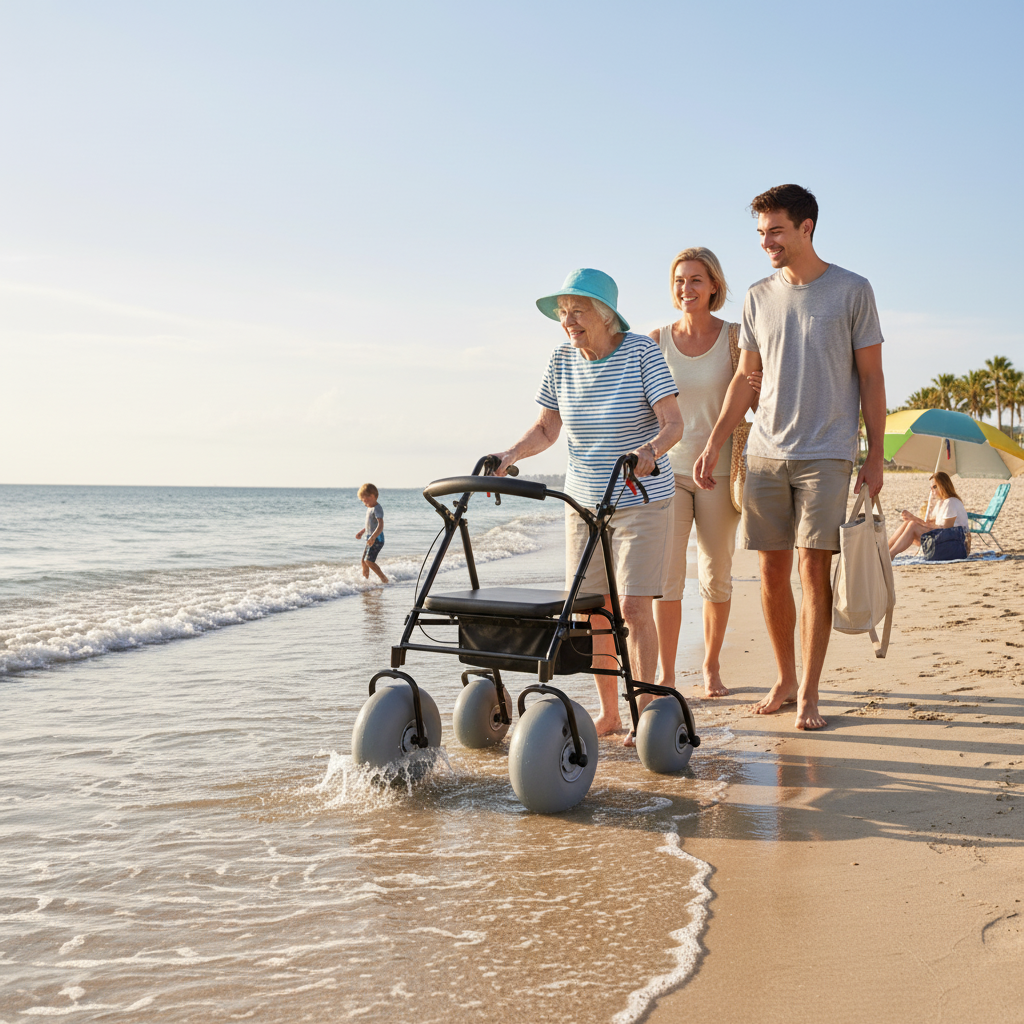
Choosing the right beach walker is about more than just buying a piece of equipment; it’s about investing in joy, freedom, and priceless memories. It’s about ensuring that a physical challenge doesn’t mean you have to miss out on the laughter of grandchildren playing in the surf or the simple pleasure of a sunset over the water.
By considering the type of sand you’ll encounter, your desire to get near the water, and the features that will make your day most comfortable, you can confidently select a companion for your coastal adventures. Whether it’s an all-terrain rollator with big balloon wheels that floats over the dunes, a submersible PVC walker that lets you wade into the waves, or a versatile convertible model, the right choice will empower you to move from sand to sea with independence and a smile. The shore is calling—and now, you have what you need to answer.