
1. Introduction
On a bright summer afternoon, families gather along the shoreline—children playing, couples taking photos, waves softly breaking on warm sand. Yet for millions of people with mobility challenges, this beautiful scene remains frustratingly out of reach. Standard wheelchairs sink instantly on sand, making beaches one of the least accessible public environments in the world. Many resort and park operators report that wheelchair users often wait at the boardwalk while their families enjoy the water, unable to fully participate.
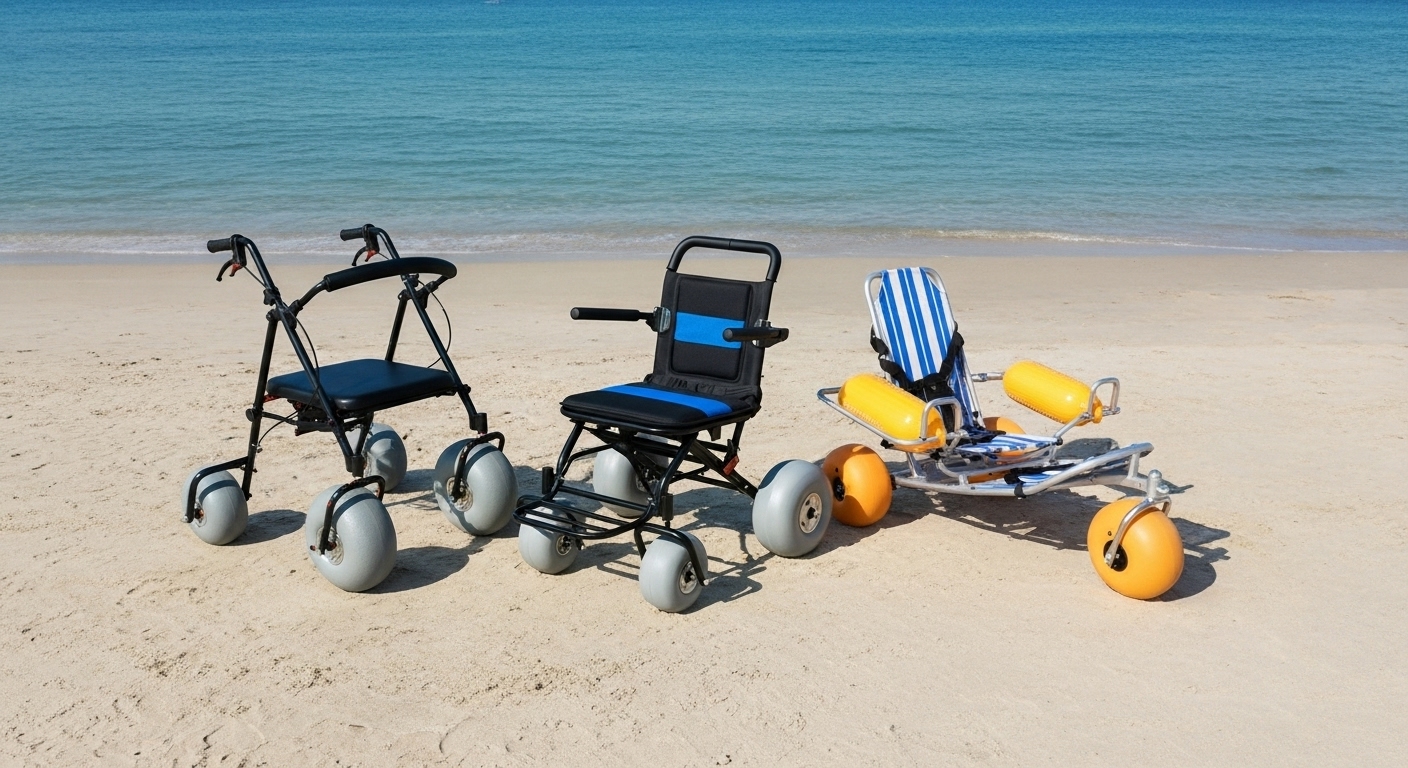
This gap is exactly where beach wheelchairs—purpose-built mobility devices designed for sand, grass, and shallow water—have emerged as a powerful solution. Beyond providing physical access, they deliver dignity, inclusiveness, and equal enjoyment for all visitors. For hotels, resorts, coastal parks, rehabilitation centers, and accessible-tourism operators, beach wheelchairs are no longer “special equipment”—they are becoming a strategic investment that enhances guest satisfaction, compliance, and brand value.
2. Global Market Demand Analysis
2.1 The Growing Population with Mobility Needs
According to the World Health Organization, over 1.3 billion people—approximately 16% of the global population—live with significant disabilities. Mobility impairment is one of the most common categories, especially among the elderly. With global aging accelerating, the number of individuals aged 60+ is expected to reach 2.1 billion by 2050 (UN, 2023). These groups increasingly seek outdoor leisure experiences, including beach tourism.
2.2 The Rise of Accessible Tourism
Accessible tourism is one of the world’s fastest-growing travel sectors. A 2022 ENAT (European Network for Accessible Tourism) report estimates the market value at $58 billion annually in the EU alone, with strong year-on-year growth. In the U.S., travelers with disabilities represent over 26 billion USD in travel spending (Open Doors Organization). Importantly, accessible travelers rarely travel alone—each booking typically includes 2–3 accompanying family members, meaning one accessible guest equals multiple room nights for hotels.
2.3 Legal & Regulatory Pressure
Governments are increasingly mandating inclusive beach access:
- ADA (Americans with Disabilities Act) requires public beaches to provide reasonable access solutions, including mobility aids.
- EU Accessibility Act (2025) strengthens beach and tourism accessibility requirements.
- Australia, Canada, Spain, UAE and other coastal nations have already implemented accessibility audits for public beaches.
For resorts and public beaches, compliance is no longer optional—it drives operational licenses, visitor ratings, and procurement requirements.
Together, these data points signal a clear trend:\
Accessibility is becoming a global standard—and beach wheelchairs are one of the most efficient pathways to compliance and customer satisfaction.
3. Technical Breakdown: What Makes a Beach Wheelchair Different?
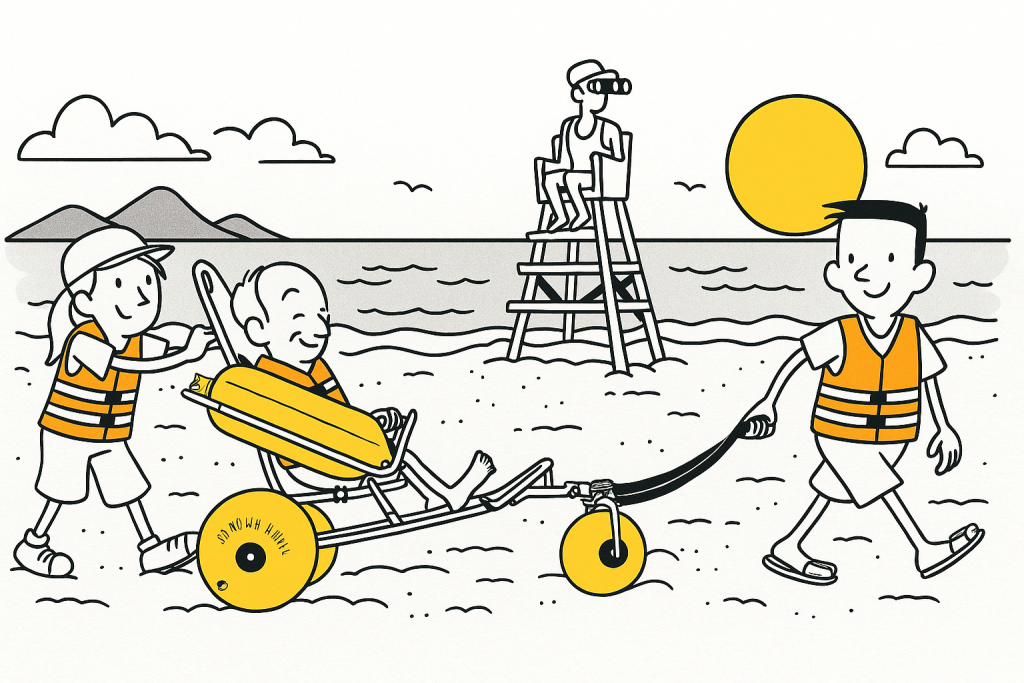
Beach wheelchairs are engineered to handle difficult terrain and water environments where standard wheelchairs fail. Understanding the technical aspects helps procurement teams evaluate quality and long-term ROI.
3.1 Key Engineering Differences from Standard Wheelchairs
| Feature | Standard Wheelchair | Beach Wheelchair |
|---|---|---|
| Wheels | Narrow, high-pressure tires | Extra-wide balloon wheels for flotation + low ground pressure |
| Terrain Capability | Hard surfaces only | Sand, gravel, grass, shallow water |
| Frame Material | Steel or basic aluminum | Marine-grade aluminum alloy / anti-corrosion stainless components |
| Rust Resistance | Basic | Saltwater-resistant, UV-resistant coatings |
| Comfort & Buoyancy | No flotation | Optional floating armrests and water-supported seating |
3.2 Two Main Categories of Beach Wheelchairs
- Floating Beach Wheelchairs
- Equipped with EVA floating armrests and buoyant balloon wheels
- Can safely float in calm water
- Ideal for resorts and therapeutic aquatic programs
- All-Terrain Beach Wheelchairs
- Large pneumatic wheels
- Enhanced stability on complex surfaces
- Suitable for public parks, patrol teams, and long-distance beach access routes
3.3 Core Technical Elements
- Marine-grade aluminum alloy frames (lightweight, rustproof)
- EVA or PVC balloon wheels to reduce ground pressure
- Detachable or foldable structure for easy storage
- High-back ergonomic seating for comfort and postural support
- Secure safety belts + corrosion-resistant hardware
- Optional accessories: sun canopy, footrests, flotation kits
As a manufacturer specializing in medical mobility devices, Ary Medical uses CNC-machined aluminum components, industrial-grade fasteners, and 20mm EVA flotation to ensure stability and durability. This engineering advantage significantly extends equipment lifespan, reducing replacement costs for B2B buyers.
4. Business Value: More Than Equipment—A Strategic Investment
4.1 Enhancing Brand Image & Corporate Responsibility
Providing beach wheelchairs signals inclusiveness, empathy, and modern service standards. Resorts offering accessible beach mobility consistently receive higher online ratings and positive media attention.
Accessibility is not just a compliance factor—\
It is a brand differentiator.
4.2 Expanding Customer Base
Every accessibility investment generates multiplied returns:
- Disabled travelers rarely travel solo
- Elderly travelers represent a growing demographic
- Families prefer destinations that accommodate diverse needs
A single beach wheelchair can benefit hundreds of guests per season, increasing room occupancy, activity bookings, and ancillary revenue.
4.3 ROI & Payback Period Analysis
Typical example:
- Cost of high-quality beach wheelchair: USD 800–1,500
- Seasonal usage: 150–300 times
- Incremental revenue per group (food, rooms, rentals): $150–$450
Resorts report ROI payback within 1–2 peak seasons, sometimes as fast as 6 months, depending on visitor traffic.
4.4 Funding, Grants, & Tax Incentives
Many countries offer:
- Tourism accessibility grants
- CSR funding
- Government subsidies
- Tax deductions for accessibility equipment
Beach wheelchairs often qualify under categories such as “inclusive infrastructure” or “public service accessibility upgrades.”
4.5 Sustainability Angle
High-grade beach wheelchairs made from recyclable aluminum and EVA reduce long-term waste. Ary Medical’s focus on material durability and component replaceability extends service life, minimizing environmental impact.
Ultimately, decision-makers should view beach wheelchairs as long-term assets—not consumable costs.
5. International Success Cases
Case 1: Miami Beach, USA
Miami Beach introduced free public beach wheelchair rentals across multiple access points.
- Usage increase: +42% year-over-year
- Visitor satisfaction score improvement: From 8.1 to 9.2
- Outcome: Became a benchmark destination for accessible tourism
Case 2: Gold Coast, Australia
The Gold Coast City Council implemented floating beach wheelchairs for family-friendly beaches.
- More than 5,000 users annually
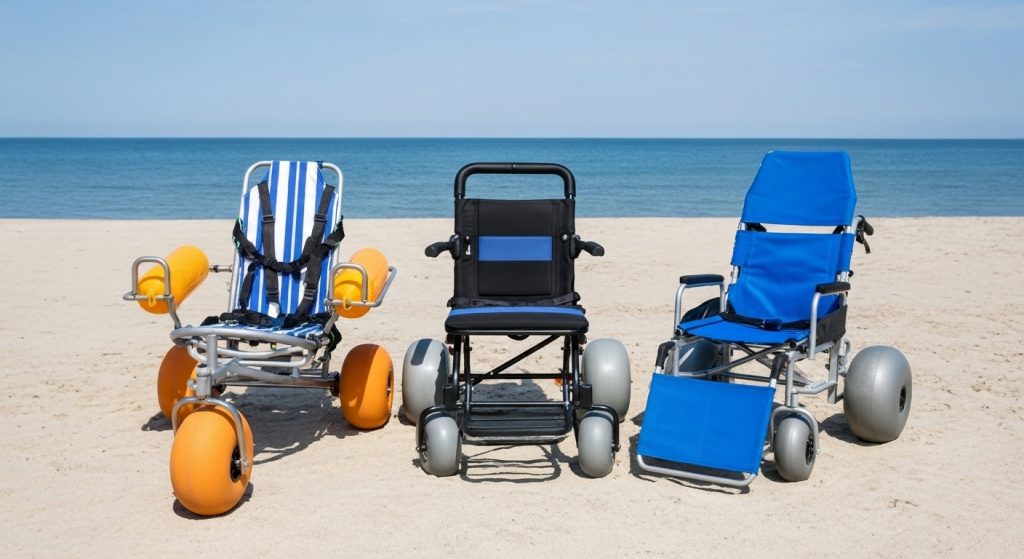
- Integrated with surf-lifesaving teams
- Result: Boosted family tourism and gained strong media recognition
Case 3: Algarve Resort Chain, Portugal
A luxury resort group adopted all-terrain models for guests over 60.
- Customer review mentions increased by 380%
- Direct lift in “family travel” revenue category
- Positioned themselves as the region’s most inclusive beach destination
These cases demonstrate that beach accessibility is not a charity initiative—it’s a revenue generator and a differentiation strategy.
6. Procurement & Implementation Guide
6.1 Choosing the Right Model
- Floating model: For resorts, therapy pools, and calm-water beaches
- All-terrain model: For long access routes, parks, and rugged beaches
- Hybrid systems: Interchangeable wheels + modular design
6.2 Recommended Quantity
General guideline:
- 1 unit per 20,000–30,000 sqm of beach area
- Minimum 2 units for mid-size resorts
- Large public beaches may require 5–10 units
6.3 Maintenance Essentials
- Rinse with fresh water after each use
- Inspect bolts, EVA wheels, and seat belts weekly
- Replace wearable components every 12–18 months
6.4 Staff Training
Training requirements are minimal:
- Safe transfer procedures
- Water-entry guidelines
- Cleaning and storage routines
Ary Medical provides instructional materials and remote guidance for B2B clients.
7. Conclusion + Call to Action
As coastal destinations compete for global travelers, accessibility has become a decisive advantage. Beach wheelchairs bring social inclusion, improved guest experience, and measurable economic benefits. For resorts, parks, rehabilitation centers, and tourism service providers, this is a strategic upgrade that aligns with compliance, brand values, and long-term business growth.
To explore floating or all-terrain models, bulk procurement options, or OEM/ODM customization, industry partners are encouraged to consult a professional manufacturer such as Ary Medical, known for its engineering quality and extensive experience in accessible mobility products.
FAQ
1. Are beach wheelchairs safe to use in the water?\
Yes, floating models use buoyant armrests and balloon wheels and are intended for calm-water environments.
2. How long does a high-quality beach wheelchair last?\
With proper maintenance, 5–7 years on average.
3. Do hotels need special infrastructure?\
No; a stable transfer area and storage location are usually sufficient.
4. What regulations affect beach accessibility?\
ADA (US), EU Accessibility Act, and various national tourism guidelines.
5. Can these wheelchairs be customized?\
Ary Medical offers OEM/ODM, color customization, branding, and component upgrades.