
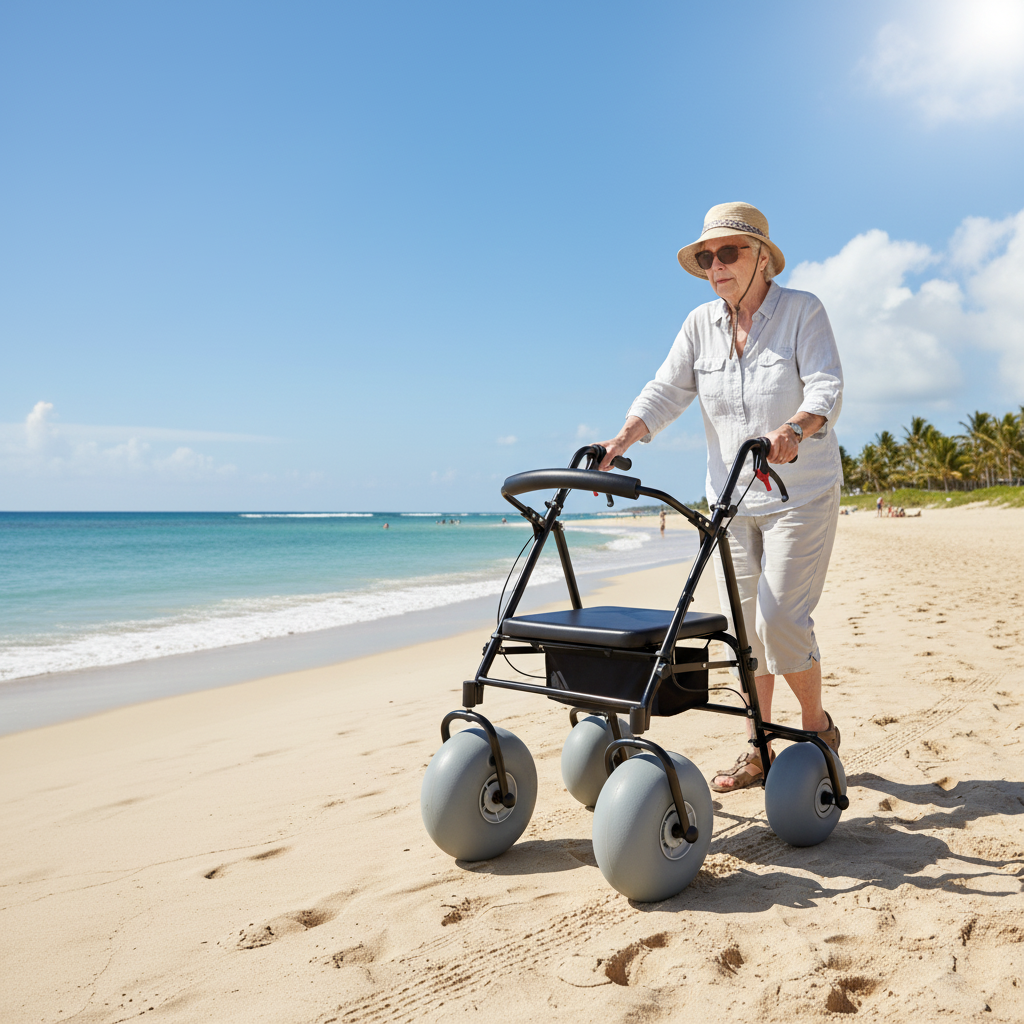
Picture it: the rhythmic crash of cerulean waves, the briny tang of salt on the air, and the promise of warm sand between your toes. It’s a primordial call, a simple joy that defines the perfect day. But for too many, this is where the journey abruptly ends—at the boardwalk’s edge. A cruel chasm separates you from the laughter splashing near the surf, turning you into an unwilling spectator of memories made just out of reach. The sand, a soft and yielding trap for standard walkers and wheelchairs, becomes an impassable frontier. This familiar heartbreak, this feeling of being left behind, is a silent, poignant ache. But what if that frontier could be conquered? What if mobility no longer meant being relegated to the sidelines, but being right in the heart of the action, with the tide washing over your feet?
That Familiar Heartbreak: When the Boardwalk Is as Far as You Can Go
For anyone with mobility impairments, the beach can be a place of profound contrast. It promises freedom, nature, and connection, yet delivers barriers and exclusion. The experience is all too common: the family eagerly heads out, towels and umbrellas in tow, while you watch from the wooden planks of the boardwalk, the sounds of their joy fading as they move towards the water’s edge.
You might try to venture out. But the moment the narrow wheels of a standard rollator or wheelchair hit the soft sand, the struggle begins. They sink instantly, digging into the very ground you wish to glide over. Every push is a monumental effort, a battle against physics that quickly drains your energy and strains your caregiver’s back. The frustration is immense. It’s the feeling of being defeated by something as simple as sand, of having your independence stripped away. This isn’t just a physical challenge; it’s an emotional one. It’s the sting of being separated from your grandkids as they build sandcastles, the quiet sadness of not being able to take a sunset stroll along the shoreline with your partner. These mobility challenges on sand create invisible walls, turning a dream destination into a reminder of limitations.
The Sand Trap: Why Traditional Mobility Aids Fail at the Beach
The failure of conventional mobility devices on sandy terrain isn’t a design flaw in their intended environment; it’s a fundamental mismatch of physics and materials. What works perfectly on a sidewalk or in a hospital corridor is destined to fail against the unique challenges of the beach environment.
The Physics of Frustration: Skinny Wheels vs. Soft Sand
The core problem lies in a simple principle: pressure. A standard walker has thin wheels to ensure maneuverability on hard, flat surfaces. However, on soft sand, this design is its downfall.
Think of it like this: trying to walk on snow in high heels versus snowshoes. The high heel concentrates all your weight onto a tiny point, causing you to sink deeply with every step. The snowshoe, however, distributes that same weight over a much larger surface area, allowing you to “float” on top.
A standard walker’s wheels are the high heels in this analogy. They concentrate the user’s weight and the walker’s own weight onto small contact patches, exceeding the sand’s ability to provide support. The result is immediate sinking, making forward movement nearly impossible. Overcoming sand obstacles with such equipment is not just difficult; it’s often unsafe.
The Silent Destroyer: How Salt and Water Corrode Standard Equipment
Even if you could somehow battle your way across the sand, a more insidious enemy is at work: the coastal environment itself. The combination of salt, humidity, and direct water contact is aggressively corrosive to materials not designed to withstand it.
Standard walkers and wheelchairs are typically made from chrome-plated steel or basic aluminum grades. While durable for indoor use, these materials are highly susceptible to rust and corrosion when exposed to salt spray. The salt accelerates the oxidation process, causing frames to weaken, joints to seize, and braking mechanisms to fail. A single beach trip can inflict permanent damage on expensive durable medical equipment (DME), leading to costly repairs or replacements. It’s a silent destroyer that compromises both the longevity of the aid and, more importantly, the safety of its user.
Enter the Beach Walker: Your All-Access Pass to the Coastline
After years of accepting the boardwalk as the final destination, a new category of assistive technology is redefining outdoor independence. It’s a solution born from a deep understanding of the beach environment’s unique demands.
A beach walker is a specially engineered mobility aid designed with large, wide polyurethane wheels and a corrosion-resistant frame, allowing users to move easily and safely over sand, pebbles, and uneven shorelines.
This isn’t just another piece of equipment. It’s a key that unlocks the coastline. It’s the tool that finally bridges the gap between the accessible pathway and the water itself, transforming a place of limitation into a world of possibility. With an all-terrain beach walker, the goal is no longer just getting to the beach; it’s experiencing it in its entirety.
The Anatomy of Freedom: What Makes a Beach Walker So Different?
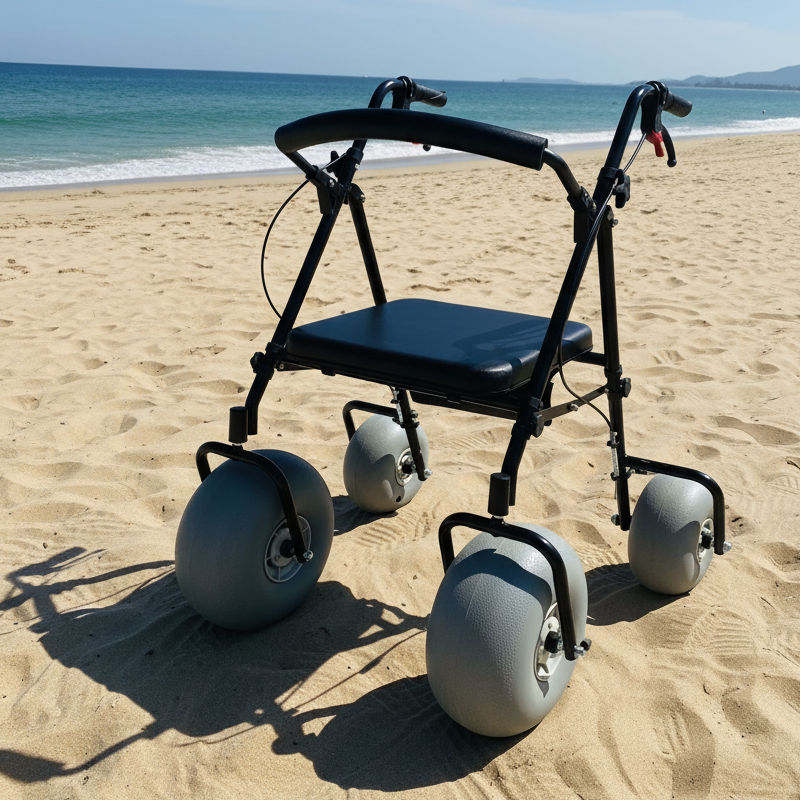
At first glance, a beach walker, sometimes called an all-terrain rollator or sand walker, might look like a standard walker on steroids. But every component has been purposefully designed and engineered to conquer the sand and surf. Let’s break down the anatomy of these remarkable mobility solutions for sand.
The Heart of the Machine: Those Big, Beautiful Balloon Wheels
The most striking feature of any beach walker is its wheels. These aren’t just larger; they are fundamentally different. Known as balloon tires or polyurethane (PU) wheels, they are the secret to a smooth ride on sand.
- Weight Distribution: These oversized beach wheels are wide and designed to be used at a very low pressure. This allows them to flatten slightly upon contact with the ground, dramatically increasing the surface area. Just like the snowshoe, this feature allows the wheels to distribute weight effectively, preventing sinking and allowing the user to glide over the sand with minimal effort. The improved traction and maneuverability on soft sand are game-changers.
- Puncture-Proof Durability: Many high-quality beach mobility devices, like the Wheeleez all-terrain rollator, use non-pneumatic (airless) polyurethane wheels. For users, and especially for rental businesses, this is a massive advantage. There are no surprise flat tires from sharp shells or debris. It’s a “set it and forget it” solution that ensures reliability and reduces maintenance headaches. These fat wheels for the beach are built for dependable performance.
Built for the Oceanfront: Frames That Resist Salt and Rust
A walker that can cross the sand is useless if it disintegrates after one season. That’s why the frame material is just as critical as the wheels. Reputable manufacturers use materials chosen for their high strength-to-weight ratio and, most importantly, their ability to resist corrosion.
- Marine-Grade Materials: You will often see frames made from high-grade, powder-coated aluminum (like 6061-T6 aircraft-grade alloy) or stainless steel. These materials are specifically chosen because they are salt and sand resistant. This durable construction means the walker won’t rust away, ensuring a safe, long-term investment. This is a critical consideration for both individual owners and businesses like hotels or rental shops looking for a positive ROI. The rust-resistant mobility aid provides peace of mind and all-weather durability.
Safety and Comfort, from Handle to Seat
A well-designed beach walker considers the entire user experience, ensuring that freedom and independence are paired with safety and comfort.
- Ergonomics and Stability: Features like adjustable, ergonomic handles provide a comfortable grip for users who may have arthritis or limited hand strength. A secure parking brake is non-negotiable, allowing the user to lock the wheels and create a stable support system before sitting or standing.
- A Place to Rest: Most models include a comfortable, durable seat made from waterproof, UV-resistant fabric. This simple feature is invaluable. It gives the user a secure place to sit and rest, to watch the waves, or simply to catch their breath without having to retreat to a distant bench. This thoughtful design element turns a simple walk into a leisurely, stress-reducing experience.
“I Can Finally Join My Grandkids”: Who Benefits from a Beach Walker?
The impact of these specialized mobility aids extends across a wide range of individuals, each with a unique story. It’s about more than just mobility; it’s about reclaiming parts of life that were thought to be lost.
For Seniors: Reclaiming Independence and Cherished Traditions
For many elderly beachgoers, the shore holds decades of memories. A beach walker is a bridge back to those cherished traditions. It means being able to join the annual family photo by the water, not just being in the background on the deck. It’s the joy of walking hand-in-hand with a partner along the surf, just like they used to. For seniors on the beach, it represents a profound reclaiming of independence and a refusal to be left on the sidelines of family life.
For Individuals with Permanent or Temporary Disabilities
For people with mobility impairments, whether from a long-term condition or a temporary injury, the world can often feel like it’s shrinking. A beach walker or sand wheelchair helps tear down those barriers. It empowers wheelchair users and others with disabilities to explore the natural world with dignity and confidence. It allows for independent beach access, fostering a sense of freedom to explore that is crucial for mental and emotional well-being. It’s a powerful tool for disability inclusion, proving that a physical challenge doesn’t have to mean a life without sand and surf.
For Post-Surgery Recovery: A Gentle, Supportive Path Back to Nature
Recovery from surgery or injury can be a long, arduous process. Physical therapy is key, but so is mental health. A beach walker can be a powerful therapeutic tool. It provides a stable, supportive platform for gentle exercise in a beautiful, calming environment. The act of walking on sand provides unique resistance that can aid in building strength, while the sensory experience of being at the oceanfront can enhance mood and reduce stress. It turns rehabilitation into a rejuvenating outdoor adventure.
Beyond One Person: Transforming Vacations for the Whole Family
The introduction of a beach walker does more than just help one person. It fundamentally transforms the dynamic of a family vacation or a group outing. It promotes an inclusive beach experience for everyone.
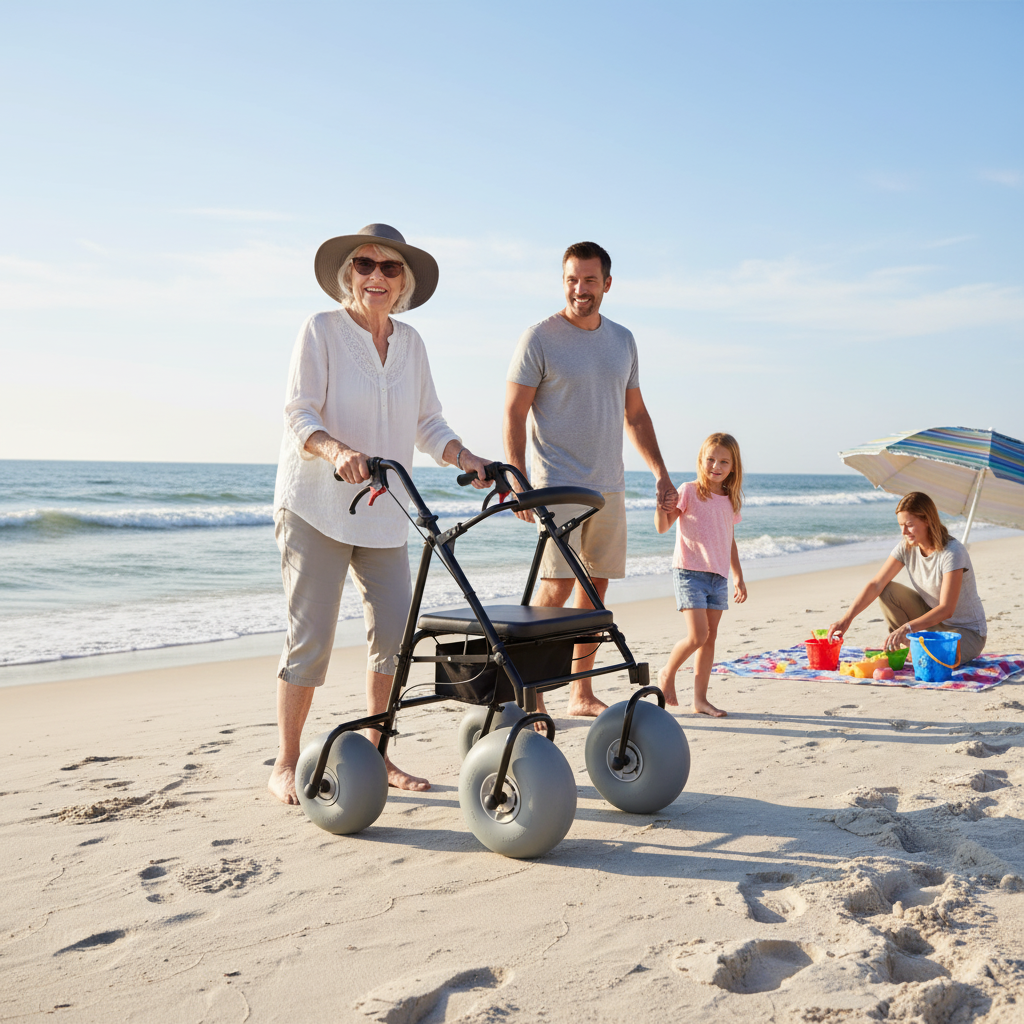
No longer does the group have to split up, with some staying behind on the boardwalk. No longer does a caregiver have to choose between assisting their loved one and joining the fun. The entire family can move together, find the perfect spot together, and enjoy the day together. It eliminates the silent burden of exclusion and replaces it with shared joy and collective memory-making. This simple piece of adaptive equipment fosters togetherness, ensuring that enjoying the beach with a disability doesn’t mean enjoying it alone. It makes beach access for all abilities a reality, enhancing the quality of life for the user and enriching the vacation for everyone around them.
How to Choose the Right Beach Walker for You or Your Business
Whether you are an individual planning a beach vacation, a caregiver assisting a loved one, or a procurement manager for a resort, selecting the right beach mobility equipment is crucial. The market includes various models, from the Debug beach walker to the Sand Rider, and asking the right questions will ensure you find a solution that fits your specific needs.
Key Questions to Ask Before You Buy or Rent
Before you purchase a beach walker or search for a “beach wheelchair rental near me,” take a moment to assess your requirements.
- Who is the primary user? Consider their height, weight, and level of mobility. Ensure the walker’s weight capacity and adjustable handle height are appropriate.
- How will you transport it? If you plan to take it on vacation, a transportable, foldable design is essential. Check the folded dimensions and weight to ensure it fits in your vehicle.
- What level of assistance is needed? Some users will self-propel the walker, while others may need a companion-pushed model.
- What are your storage needs? Will you need a basket or bag for towels, books, or water bottles? Do you need a cup holder or even a fishing rod holder?
- Where will it be used? While designed for sand, consider if you’ll also be navigating gravel paths, grass, or cobblestones. True all-terrain mobility devices offer this versatility.
A Quick Comparison: Essential Features vs. Helpful Extras
To simplify your decision, we’ve broken down the features into “must-haves” for true beach functionality and “nice-to-haves” that add convenience and comfort.
| Must-Have Features | Nice-to-Have Extras |
|---|---|
| Large Polyurethane (PU) Wheels: The non-negotiable core feature for navigating soft sand. They must be wide and low-pressure to prevent sinking. | Detachable Storage Bag: Offers a convenient way to carry personal items and can often be taken with you when you park the walker. |
| Corrosion-Resistant Frame: Essential for longevity. Look for marine-grade aluminum or stainless steel frames with a protective finish. | Built-in Cup or Rod Holder: A small luxury that enhances the experience, perfect for staying hydrated or enjoying a bit of surf fishing. |
| High Weight Capacity: A critical safety feature. Ensure the walker can comfortably and safely support the user’s weight. | Custom Color Options: Allows for personalization or branding, which is a great option for hotels and rental companies. |
| Secure Braking System: Look for easy-to-engage parking brakes that provide stability when sitting, standing, or resting. | Umbrella Mount: A fantastic accessory for creating personal shade, offering protection from the sun during long days on the shore. |
| Comfortable, Durable Seat: The seat should be made of quick-drying, UV-resistant material that provides a safe and comfortable resting spot. | Foldable Design for Easy Transport: While not essential for a stationary resort, this is a must-have for personal travel and easy storage. |
A Smart Amenity: Why Hotels and Rental Shops Are Investing in Beach Walkers
For hotels, resorts, and beach equipment rental businesses, offering accessible amenities is no longer just about compliance; it’s a powerful business strategy. Investing in a fleet of high-quality beach walkers and beach wheelchairs is a smart move that delivers a significant return.
By providing these mobility solutions, you immediately differentiate your property. You are sending a clear message that you are committed to inclusive tourism and providing an exceptional guest experience for everyone. This resonates strongly with a huge and growing market segment: seniors, multi-generational families, and travelers with disabilities. According to recent accessible travel studies, these individuals are incredibly loyal to businesses that cater to their needs.
Offering a beach walker rental service can also create a new, high-demand revenue stream. Furthermore, providing such accessibility tools—along with other solutions like roll-out beach walkways ( MobiMat ) and accessible showers—helps properties meet ADA (Americans with Disabilities Act) guidelines and demonstrates a commitment to universal design. The result is higher guest satisfaction scores, glowing online reviews, repeat business, and a reputation as a truly welcoming and barrier-free destination.
Conclusion: It’s Not Just About Mobility, It’s About Belonging
The development of the beach walker marks a profound shift in outdoor accessibility. These devices do so much more than simply help a person move across sandy terrain. They dismantle the barriers—both physical and emotional—that have for too long excluded people from one of life’s simplest pleasures. They are about redefining outdoor independence, yes, but on a deeper level, they are about fostering connection and a sense of belonging.
A beach walker gives a grandfather the freedom to chase the waves with his grandchildren. It gives a recovering athlete a path back to the healing power of nature. It gives a family the priceless gift of being together, creating shared memories right at the water’s edge. It’s not just about mobility; it’s about life, joy, and the fundamental human need to be a part of the world around us.
Ready to feel the waves on your toes again?